Meeting 3 — “On the Shore of the Church”
Goal of the meeting
Meetings in groups “On the Shore” are to create primarily a space for dialogue and mutual listening to the voice of other members of the Church. The conferences preceding the meetings were subordinated to this goal - to inspire, to create a common experience, to which we can now refer together.
Today’s prayer is the prayer of the faithful for vocations. We want to ask God for new vocations, and also thank him both for vocations to various professions, careers and interests, as well as for the vocation to love, realized in married, consecrated or individual life.
Community bonding - what is a “vocation”?
We usually associate vocation with priesthood, or broadly understood consecrated life; however, when we think about it more deeply, we will notice that the issue of vocation concerns each of us.
What is a vocation?
What are my associations with the word “vocation”?
What does it mean to be someone “by vocation”?
It is very difficult to define what a vocation is, it is much easier to say what it is not. It is certainly not a conviction that we are good at something, it is certainly not a dream to do something, it is certainly not an idea for life.
Vocation to holiness
Let’s read:
even as he chose us in him before the foundation of the world, that we should be holy and blameless before him. He destined us in love to be his sons through Jesus Christ, according to the purpose of his will, to the praise of his glorious grace which he freely bestowed on us in the Beloved.
—Eph 1:4-6
From these words of St. Paul it clearly follows that God’s will is for us to be his children through Christ. The only thing this relationship calls for is likeness to the Father and reflecting his holiness. However, the concrete way in which we answer this call is left to the creative freedom of man. Of course, in the case of man, this is not creating from nothing. It takes place on the basis of who we are, our temperament, our desires and abilities, our sensitivity to the surrounding world and the events in which we participate. God’s will is not a detailed plan written in advance determining the shape of our life.
How do you understand vocation in the context of free will?
How do I discern/have I discerned my vocation?
What does it mean that “God chose us in Christ”?
Vocation to do good
Man is born with the capacity for love implanted at the moment of creation. God both enables and calls each of us to love. This love can develop or be buried like the talents from the evangelical parable. Love is our supreme vocation and commandment, in which the whole law is summarized. To the question which commandment is the greatest, Jesus answers:
you shall love the Lord your God with all your heart, and with all your soul, and with all your mind, and with all your strength.’ The second is this, ‘You shall love your neighbor as yourself.’ There is no other commandment greater than these.”
—Mk 12:30-31
We can realize love in things as simple as reading various statements on the internet. Let’s try to read selected posts of various public figures and share our thoughts focusing on the positive things we see in the statements.
Note
Goal of the task - showing that appreciating is building up, on the example of content that we can encounter every day. Participants read posts/tweets, and try to refer to them positively, e.g. appreciate the author’s perceptiveness, his sensitivity to a topic, choice of words. It is not about whether the content itself is good, because we tried to choose positive content, but about referring to the whole. Below are the original statements selected for this workshop, the animator should familiarize themselves with them before the group meeting in order to obtain full context.
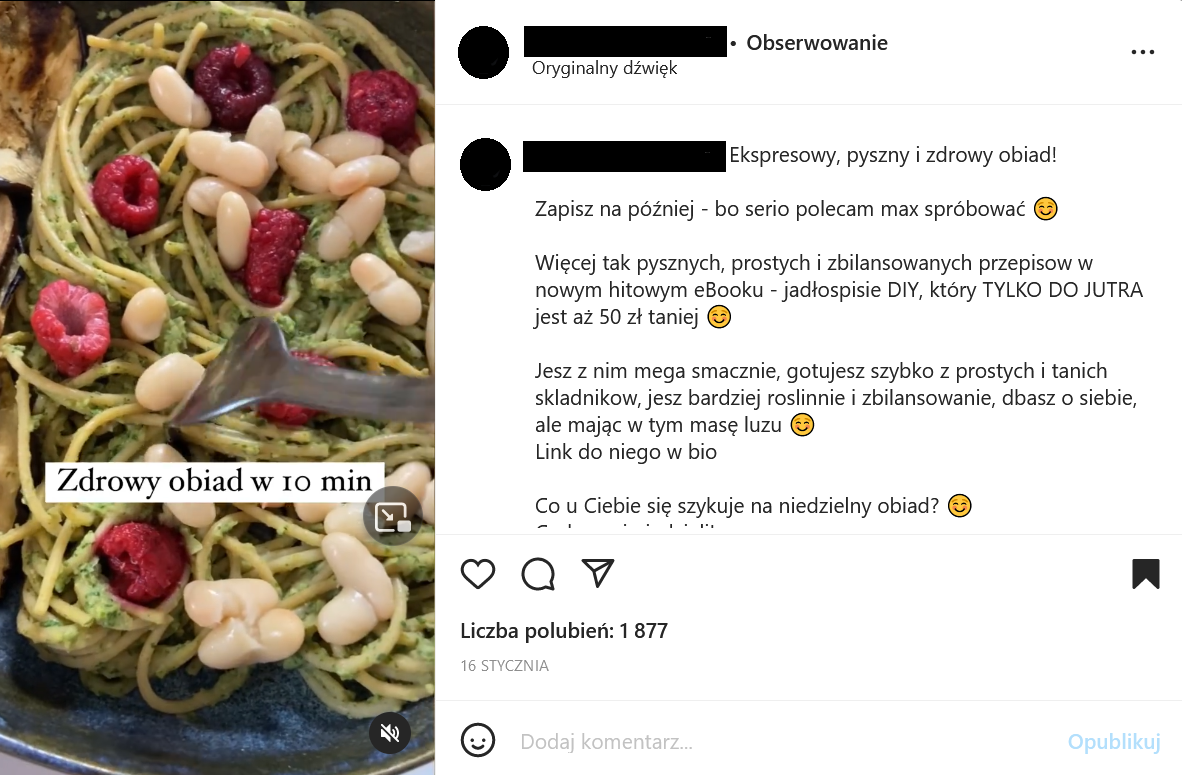
Statement number 1
Statement number 2
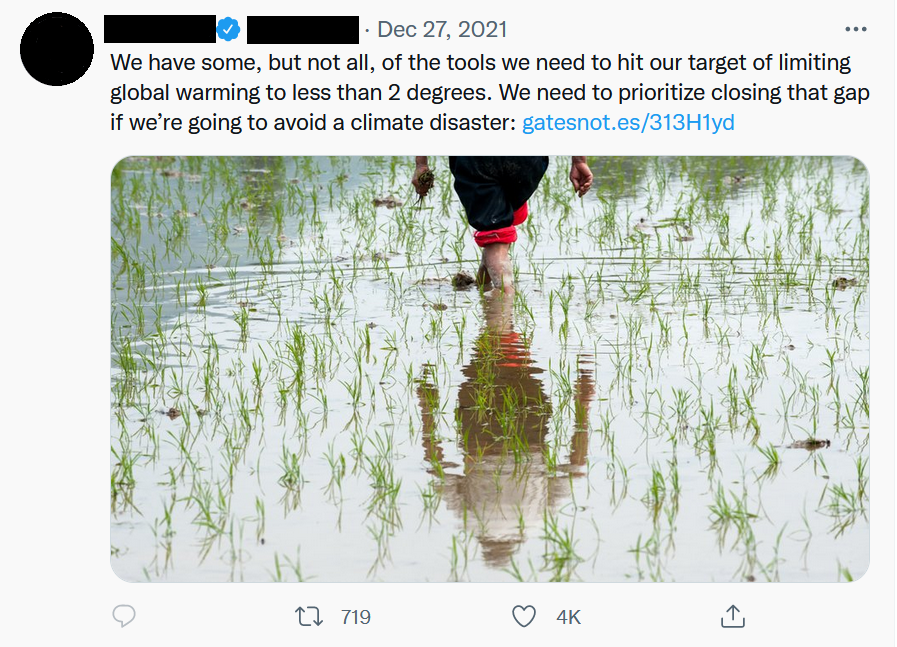
[TRANSLATION] Although we don’t have all the necessary tools, the ones we have will allow us to reduce global warming by 2 degrees Celsius. If we want to avoid a catastrophe on a global scale, we must make this task our priority.
Statement number 3

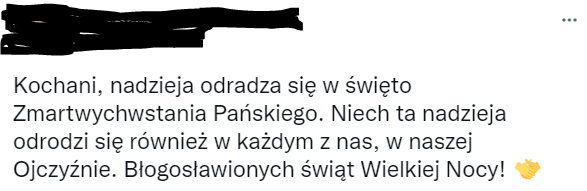
Statement number 4
What positive things do I see in this content? What can I appreciate in them?
What does my sensitivity to the good in the content I experience look like on a daily basis? Do I see positives or negatives more easily?
Note
we reveal the authors
- authors of tweets:
1 - Irena Owsiak (@healthyomnomnom)
2 - Bill Gates
3 - Radio Maryja - quote from Fr. Rydzyk
4 - Władysław Kosiniak-Kamysz
After revealing the authors it is recommended to read the questions below to help participants formulate their statements summarizing the workshop. The animator can start by sharing their observations.
Knowing the author of the tweet, would I evaluate them similarly?
Would it be harder/easier/irrelevant for me?
When I read statements, do I first wonder where to assign a given person, and then read what they said?
Building the Church
Through daily realization of love we build the Church as a community of believers. Lay people constitute the greater part of the Church and have a real chance to change it for the better. However, we are not always aware of our importance, possibilities, and responsibility; that we REALLY, DAILY build this community.
Let’s read:
“For this commandment which I command you this day is not too hard for you, neither is it far off. It is not in heaven, that you should say, ‘Who will go up for us to heaven, and bring it to us, that we may hear it and do it?’ Neither is it beyond the sea, that you should say, ‘Who will go over the sea for us, and bring it to us, that we may hear it and do it?’ But the word is very near you; it is in your mouth and in your heart, so that you can do it.
—Deut 30:11-16
What is the reason for my happiness in the Church?
What does “being happy” mean for a man of faith?
What would have to change for me to be happier?
What can we as lay people do towards building happiness in the Church?
Life in beatitudes
Let’s read:
And he opened his mouth and taught them, saying:“Blessed are the poor in spirit, for theirs is the kingdom of heaven.Blessed are those who mourn, for they shall be comforted.Blessed are the meek, for they shall inherit the earth.Blessed are those who hunger and thirst for righteousness, for they shall be satisfied.Blessed are the merciful, for they shall obtain mercy.Blessed are the pure in heart, for they shall see God.Blessed are the peacemakers, for they shall be called sons of God.Blessed are those who are persecuted for righteousness’ sake, for theirs is the kingdom of heaven.Blessed are you when men revile you and persecute you and utter all kinds of evil against you falsely on my account. Rejoice and be glad, for your reward is great in heaven, for so men persecuted the prophets who were before you.– Mt 5:3-12
Jesus immediately afterwards speaks to the disciples about their task:
You are the salt of the earth […]You are the light of the world. […]Let your light so shine before men, that they may see your good works and give glory to your Father who is in heaven.”– cf. Mt 5:13-16
We are to be the salt of the earth, people of hope who live the Good News. Are we actually them? Let us consider whether people around us can discover that the goal of our aspirations is really residing with God and all the saved.
How do you understand living by beatitudes?
What blessing do I bring with me to the community/family/work?
In what way do the beatitudes connect with the commandments?
Application
Let’s look at our own everyday life and in a free moment let’s ask ourselves questions and plan actions!
How do I realize my vocation to holiness?
Does what I do lead me to holiness?
What can I really do to go in the right direction?